
moligoTECHNOLOGIESPartner with us

Chemistry throughout the strand.

We focus on the synthesis of highly functionalised long ssDNA, enabling a new generation of DNA-based therapeutics that can be non-immunogenic, more permeable and resistant to nucleases.

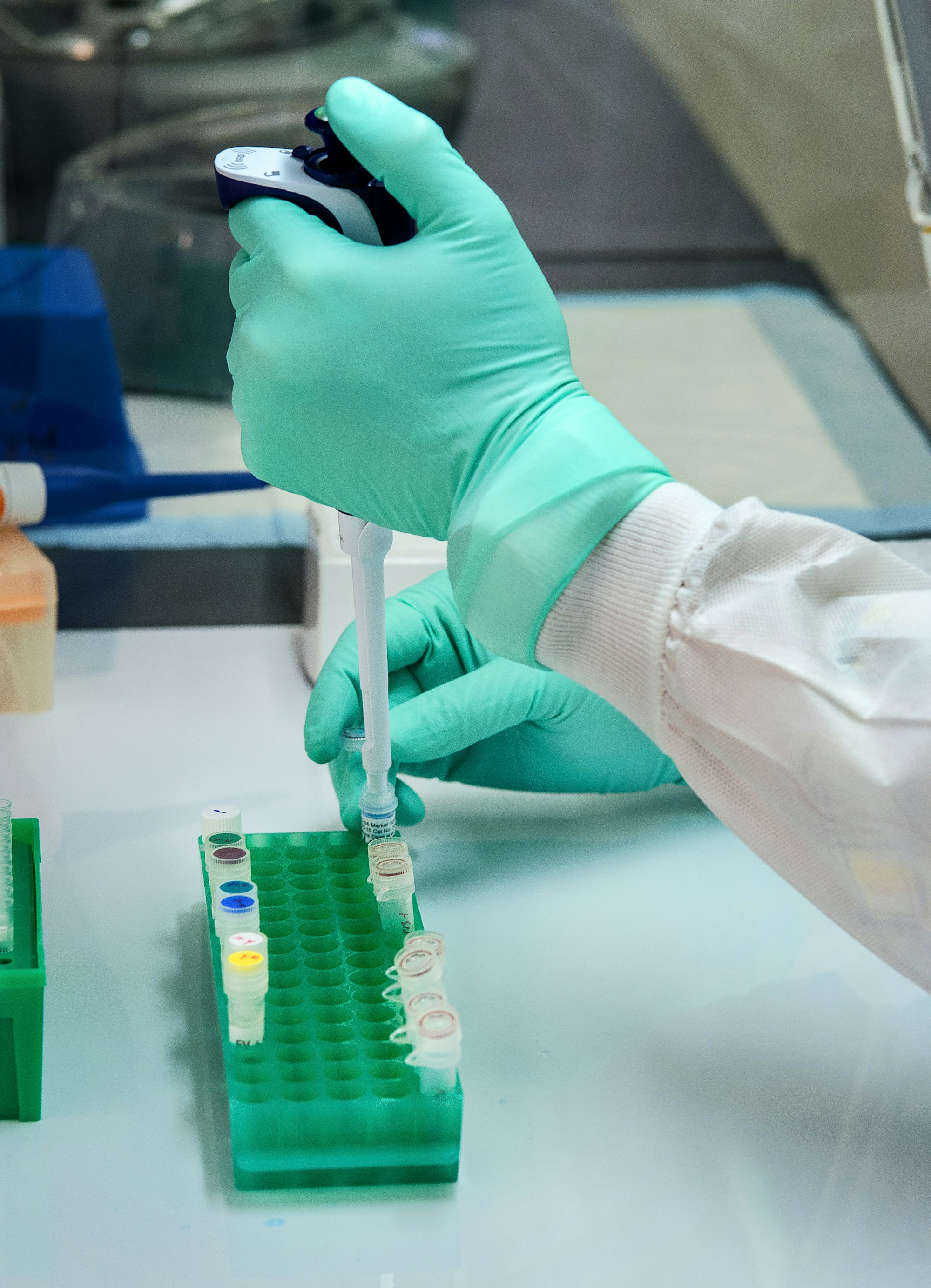
Gloved hands handling a pipette and sample rack

A granted European patent.

EP3921440B1, “Method and products for producing functionalised single stranded oligonucleotides”. Granted in Europe. Inventors Cosimo Ducani and Björn Högberg. Assigned in full to Moligo Technologies AB.

Read the European patent

Long ssDNA donors for non-viral gene insertion.

Gene delivery usually means a viral vector, most often AAV. Everything has to fit inside about 4.7 kb, promoter and polyadenylation signal included, and depending on serotype 30 to 60 per cent of people already carry neutralising antibodies to the capsid.

Long ssDNA has no capsid. For ex vivo editing the donor goes straight into the cell, and we supply sequence-verified linear and circular donors up to 10 kb today. Delivery inside the body is a different problem: with no capsid and no lipid nanoparticle, the donor has to survive serum nucleases and innate sensing on its own chemistry. That is what the modification programme is for. Two handles are available there: the ratio of modified to natural bases, and ligand conjugation to built-in clickable sites.

Chemistry adds another dimension to that donor. Internal modification lets us investigate properties across the molecule, beyond protection at its ends.

Our process uses a modified nucleotide pool. Incorporation is distributed throughout the strand, with dose control by base identity.

How internal modification works

What chemistry did for oligonucleotide drugs.

Oligonucleotide medicines combine backbone, sugar, base and delivery chemistry to meet requirements that pull against each other.

Long DNA donors raise a related question: what changes when chemistry reaches beyond the ends? The short-drug precedent motivates the research.

Why modified DNA

Internal modification.
Compositional control.

Moligo fine-tunes modification density with precision. Density is set by the ratio of modified to natural bases, and by ligand conjugation to built-in clickable sites.

The dose is a design variable across the entire molecule, not a property fixed by the process.

Global substitution has natural precedents. T4 uses hydroxymethylcytosine with subsequent glucosylation. Phage S-2L replaces adenine with 2-aminoadenine; PBS2 uses uracil in place of thymine.

S-2L modification study and T4 background, Nature Communications 2021; PBS2 polymerase study, 1972.

Our design variable is global substitution with per-base-channel dose control, as in modified messenger RNA. Chemistry selection, incorporation and product composition must be established for each project.

Terminal modification

Modification throughout the strand

Schematic. Positions are illustrative.

The difference is where chemistry enters the process.

Why our technology

Moligo introduces modified nucleotides into the synthesis reaction. Chemistry can be incorporated throughout the strand, beyond attached end adaptors or a short annealed segment.

The design variable is composition across the molecule. We set the dose per base channel, as in modified mRNA. Moligo holds EP3921440B1, granted in Europe, for producing functionalised single-stranded oligonucleotides. Assigned in full to Moligo Technologies AB.

Where chemistry sits
ApproachWhere chemistry sitsReach on a 5 kb donorScope
Modified end adaptorsThe attached ends1%, for two 25-base adaptorsDefined chemistry within an adaptor.
Annealed modified oligonucleotideA local annealed segment2%, for a 100-base patchDefined chemistry within the oligonucleotide.
Solid-phase synthesisPositions within the synthesised oligonucleotideConventional synthesis produces short oligonucleotides, not a direct 5 kb strandLength, purity and chemistry depend on the process.
Moligo enzymatic synthesisTunable incorporation across the moleculeFull-length reach in the selected base channelsLinear and circular services up to 10 kb. Modification feasibility and incorporated fractions are agreed per project.

Reach percentages are arithmetic on the stated adaptor and patch lengths. They describe span, not measured chemical composition.

REACH OF CHEMISTRY ON A 5,000-BASE DONOR Two 25-base end adaptors 1% One 100-base annealed patch 2% Solid-phase synthesis Conventional short-oligo synthesis, not direct 5 kb synthesis. Moligo enzymatic synthesis Full
Arithmetic on the stated adaptor and patch lengths: 50 / 5,000 = 1%; 100 / 5,000 = 2%. Substitute your own donor length and adaptor size. “Full” describes the span accessible to incorporation. Dose is set per base channel.

Measure the product.

Sequence identity, full-length content, chemistry and topology are separate attributes. We agree their analytical requirements within each project.

Test the biological result.

Internal chemistry has the potential to improve several properties of a DNA molecule: nuclear permeability, resistance to nucleases, immunogenicity, and efficiency as a donor template or for episomal expression.

Explore the technical comparisons

What the evidence establishes.

Internal modification and circular topology answer different questions. The studies below should be read separately.

Kanke et al. · Nucleic Acids Research · 2024

Internal versus terminal modification in short donors.

DonorHDR
Internal chemical modification41 ± 15%
End-modified24 ± 6%
Unmodified15 ± 5%

CFTR editing in airway basal cells, 800 nM donor, with the DNA-PK inhibitor AZD-7648. Figure 1C.

In this short-donor comparison with AZD-7648, internal chemistry increased mean HDR by 17 percentage points over end modification and 26 points over unmodified donors. Moligo sets the nucleotide-pool dose per base channel.

Kanke et al., Figure 1C. Defined-spacing short donors. Read the density results and study context.

Read the Kanke paper
Letort et al. · Nature Communications · 2025 · With Cellectis

Circular versus linear ssDNA in HSPCs.

For the 0.6 kb donor, circular ssDNA achieved 45.2 ± 5.0% knock-in, compared with 8.8 ± 3.6% for linear ssDNA (mean ± SD). The protocol used TALEN editing and included viability and HDR enhancers.

Circular ssDNA gave approximately five-fold higher knock-in than linear ssDNA for the 0.6 kb donor under these conditions. Moligo supplies the circular format.

Letort et al., Nature Communications 2025. Moligo co-authors: Roger Salvatori and Cosimo Ducani (employees and equity holders). Full competing interests are reported in the paper.

Read the Cellectis collaboration paper

Choose chemistry for the application.

Both routes below are non-viral: the donor arrives as DNA, not inside an AAV capsid, so the 4.7 kb packaging limit and capsid immunity fall away. A capsid also protected its cargo. Ex vivo, the donor goes straight into the cell. Delivered in the body without a lipid nanoparticle, it has to survive serum nucleases and innate sensing on its own chemistry.

Ex vivo editing

The donor is introduced into cells outside the body. Plasma exposure is not part of this route. Evaluate intracellular donor survival, cell viability, repair and the number of usable edited cells.

In vivo delivery

Systemic delivery also brings circulation, clearance and formulation into the design. A chemistry selected for ex vivo editing cannot be assumed to behave the same way in vivo.

The donor can fail in four places
WhereWhat reads the donorWhat it costsWhat chemistry addresses it
Circulation (systemic delivery)Serum nucleases and hepatic clearance receptors.Loss of donor before tissue delivery.Backbone and sugar chemistry can affect stability and clearance. Systemic exposure is not part of an ex vivo editing step.
EndosomeTLR9 recognition depends on sequence, chemistry and delivery context.Innate signalling that can affect cell performance.5-methylcytosine can alter CpG recognition. Formulation can change this effect; methylation is not a guarantee of reduced sensing.
CytosolTREX1 degradation; cGAS-STING, AIM2 and IFI16 sensing.Loss of donor, inflammatory signalling and reduced usable-cell yield.Phosphorothioate can address nuclease susceptibility. Strandedness, structure and topology also matter. Longer persistence can increase sensing.
NucleusRepair and recombination machinery.A donor that persists but is not used for repair.Dose is set per base channel, allowing modification density to be varied and tested for compatibility with repair.
Different sensors and nucleases read different features. No single chemistry resolves every requirement.

Chemistry is developed within the partnership.

Backbone, base and sugar modifications present different incorporation and biological questions. We assess the combinations, fractions and lengths that can be investigated within an agreed partnership scope.

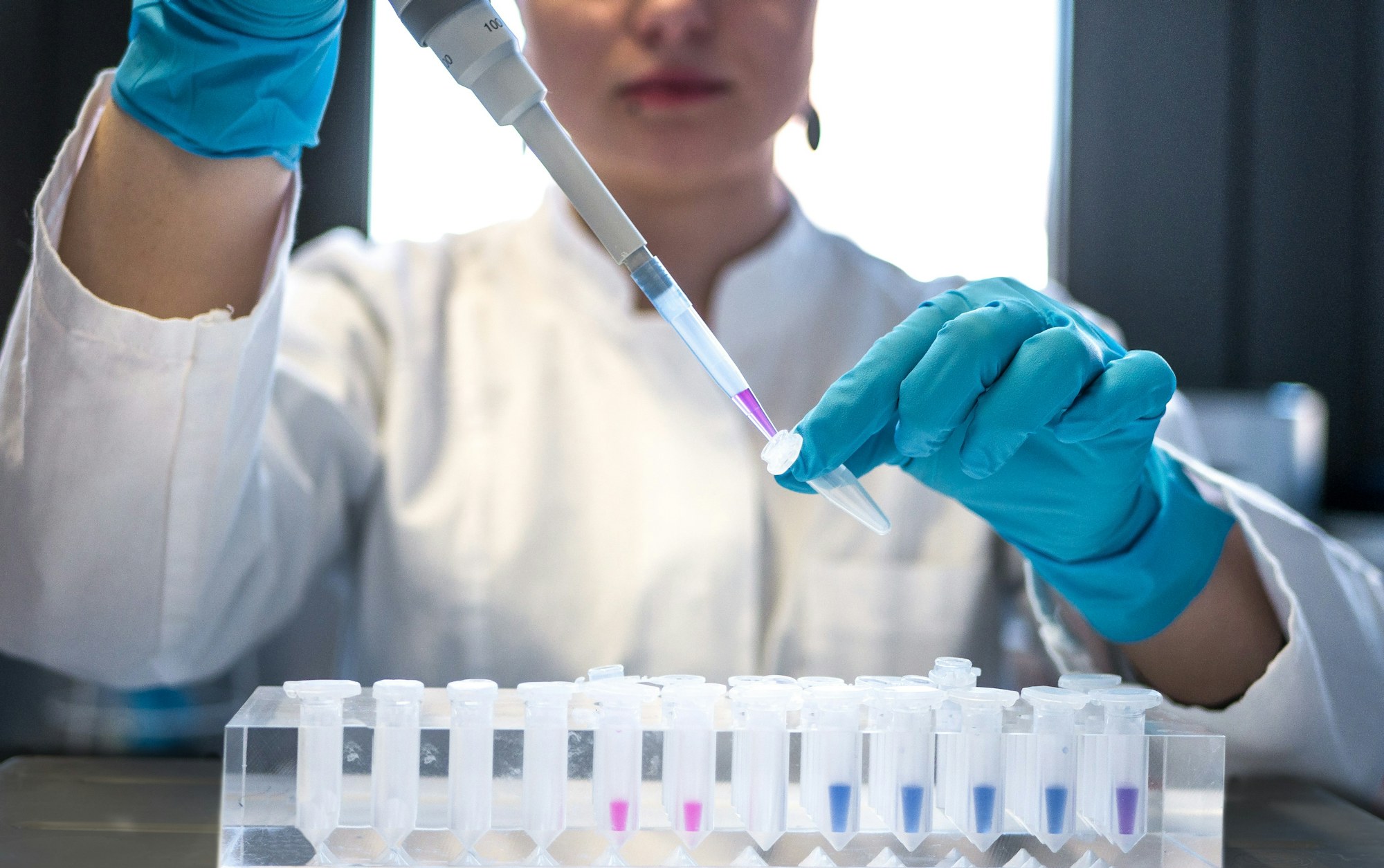
Scientist pipetting into a row of laboratory sample tubes

Enzymatic Injection Molding Technology.

Moligo’s platform uses sequence-verified production templates and in vitro enzymatic reactions to produce long ssDNA. Modified nucleotides are introduced through the reaction pool.

Linear and circular formats remain part of our synthesis service. We agree the sequence, chemistry, format and analytical specification for each project.

Explore native DNA

What we establish together

  • The target sequence and length.
  • The modified nucleotide chemistry and reaction composition.
  • Product composition, strand format and release testing.
  • The matched controls needed to interpret biological performance.
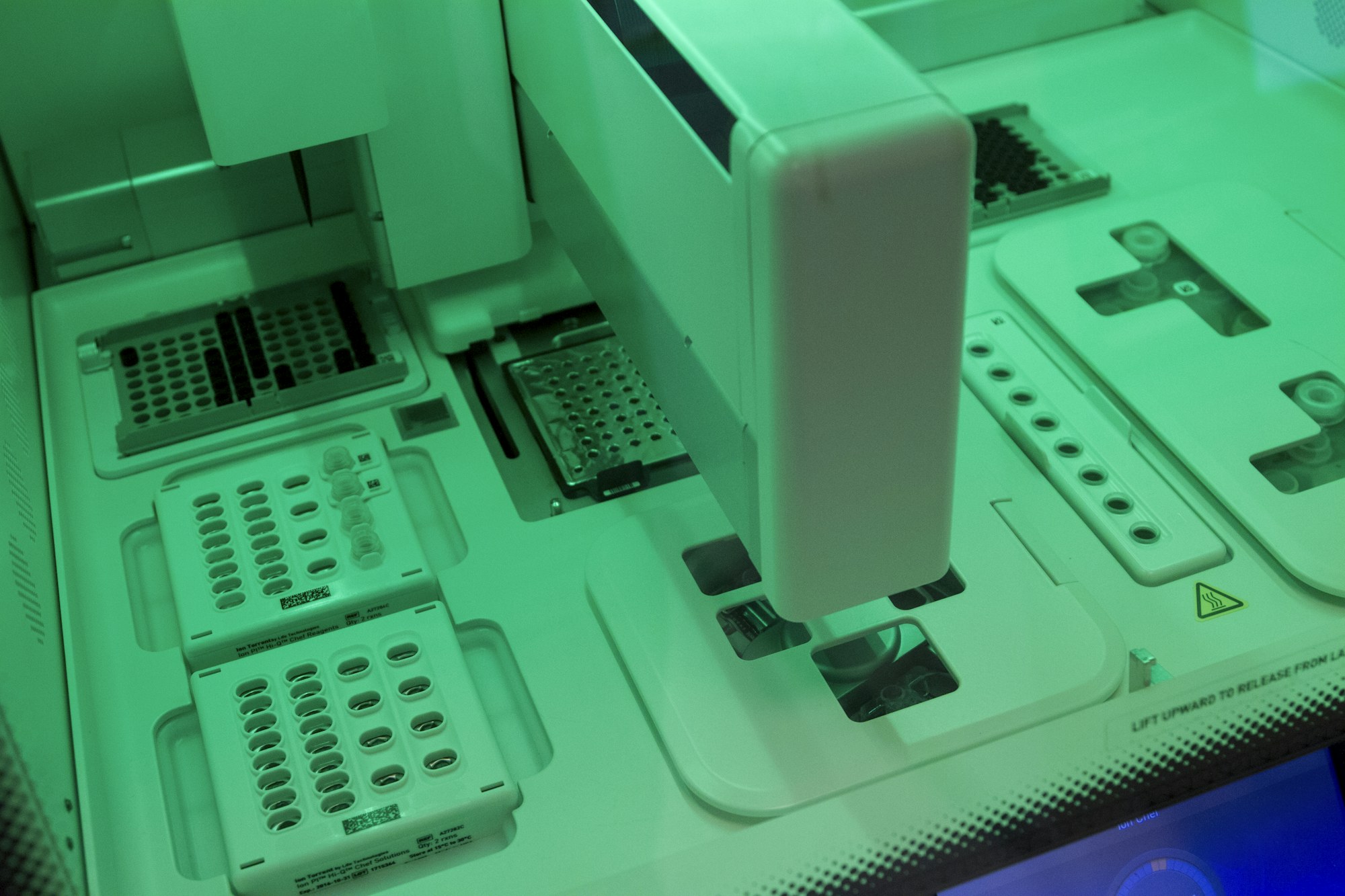
Close view of laboratory automation equipment

Discuss your DNA.

Tell us about your sequence, application and the chemistry you want to investigate.

Talk to our scientists